
World-class dental care in China, same premium quality yet far more affordable than European & US treatments for your bright smile.
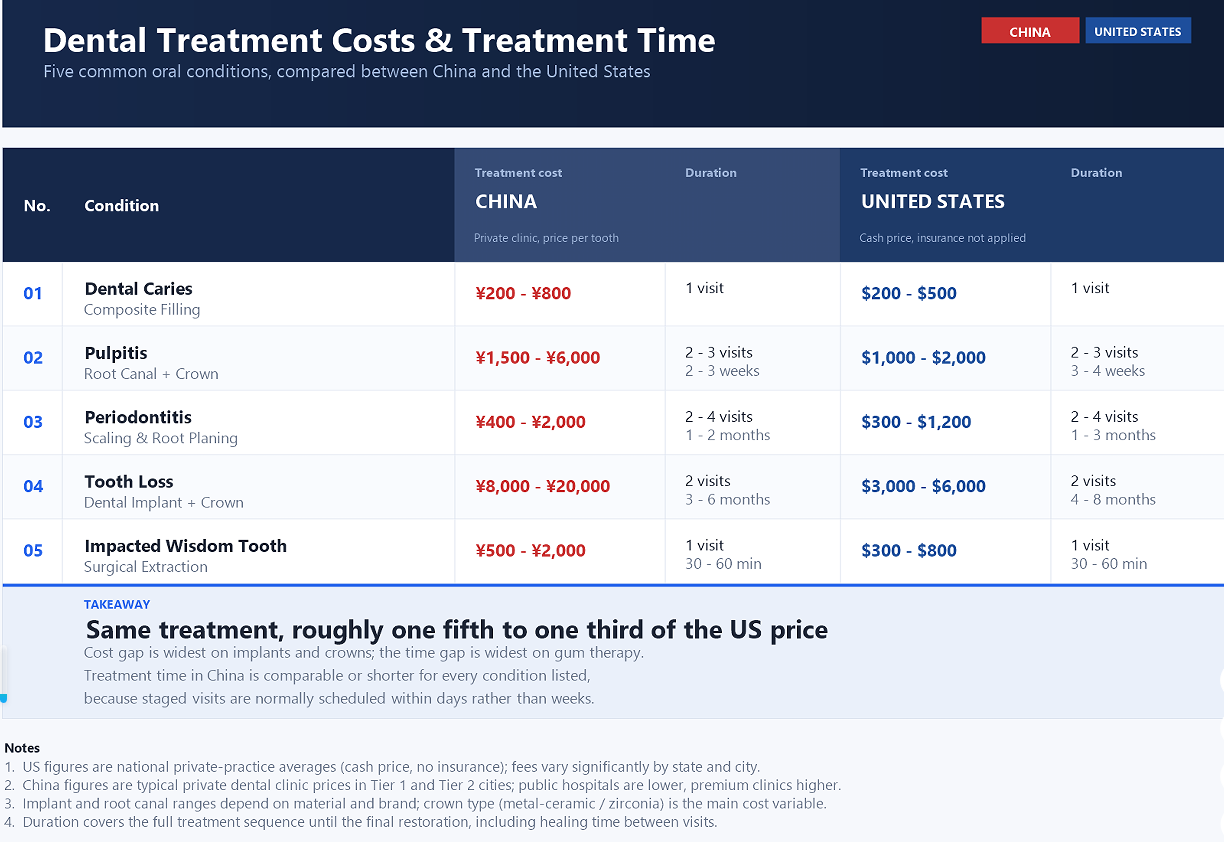
Common oral health services include routine checkups, professional cleaning, fluoride application, pit-and-fissure sealing, and oral hygiene education. For oral diseases, dentists provide effective treatments such as fillings for caries, root canal therapy, periodontal scaling and surgery, extractions and wisdom-tooth surgery, crowns and bridges, dental implants, orthodontics, and pediatric dentistry. Most procedures are standardized, minimally invasive, and deliver good outcomes with shorter recovery. A major advantage is cost-effectiveness. Compared with many developed countries, Guangdong offers high-quality dental care at much lower prices, with transparent fees and competitive packages in both public and private institutions. Patients can receive efficient, professional treatment and long-term preventive care at an affordable cost, making Guangdong an attractive place for dental care.
Quick Summary
Guangdong has rich, well-developed dental care resources, with leading stomatological hospitals, university-affiliated dental schools, and many licensed private clinics in cities such as Guangzhou, Shenzhen, and Foshan. These facilities use advanced digital imaging, CAD/CAM, microscopes, and implant systems, and are staffed by experienced specialists, ensuring accurate diagnosis and reliable treatment.
Key Facts
Medical Disclaimer
This content is for informational purposes only and is not medical advice. Patients should consult qualified healthcare professionals before using Traditional Chinese Medicine or any treatment for digestive symptoms.
Overview
China has responded to these challenges with a comprehensive, multi-tiered strategy. At the policy level, the National Health Commission issued the Healthy Oral Action Plan (2019–2025), which set quantified targets and outlined four key actions covering oral health behavior promotion, service capacity improvement, and disease intervention. The plan emphasizes a life-course approach, targeting pregnant women, children, working-age adults, and the elderly, while promoting prevention as the primary strategy. More recently, oral health has been integrated into broader national frameworks, including the Children and Adolescents' "Five Health" Action Plan (2026–2030), which identifies dental caries prevention as a core task.
China's approach is also characterized by technological innovation and grassroots implementation. AI-powered diagnostic systems such as DentalGPT and the "AI Dental Wisdom Diagnosis" system have been deployed to improve screening accuracy and reduce consultation time, achieving a diagnostic accuracy rate of 93.4% and shortening patient visits by 58%. School-based programs have proven highly effective: in Shenzhen, AI-assisted screening covered over 32,000 students across 413 pilot schools, while a large-scale pit-and-fissure sealant program in Dongguan demonstrated significant reductions in caries incidence among children. Cost-effectiveness analyses further confirm that promoting twice-daily toothbrushing yields substantial health benefits, reducing periodontitis by 50.2% and tooth loss by 24.8%, while generating net savings.
Disease Profiles
The hospital covers all eight national key clinical specialties in stomatology, including Endodontics, Oral and Maxillofacial Surgery, Prosthodontics, Orthodontics, Oral Implantology, Pediatric Dentistry, Periodontics, and Oral Mucosal Diseases. Its Endodontics Department leads nationally in microscopic root canal therapy, having drafted China's technical guidelines and pioneered minimally invasive pulp treatment. The Department of Oral and Maxillofacial Surgery specializes in orthognathic surgery for congenital dentofacial deformities and post-traumatic malunion, collaborating closely with orthodontists for comprehensive treatment planning. The International Dental Medical Center further offers multidisciplinary consultations, nitrous oxide sedation, robotic implant navigation, and direct billing with major international insurers.

Cross-border Healthcare Insights
China's oral healthcare is entering a new era shaped by policy, technology, and rising public demand. Under the Healthy Oral Action Plan and expanded centralized procurement, dental implants, crowns, and orthodontic materials are becoming more affordable. Community and county-level clinics are being strengthened, while public hospitals and private chains collaborate through referral systems and standardized training. Digital dentistry—intraoral scanning, 3D printing, AI-assisted diagnosis, robotic implant navigation, and teledentistry—will make care faster, more precise, and less invasive. Prevention will shift from treatment-centered to lifelong oral health management, with school sealant programs, regular checkups, and insurance coverage for basic services. Patients can expect lower out-of-pocket costs, shorter waiting times, and better access in rural areas. Complex cases will benefit from multidisciplinary specialists and minimally invasive techniques, while children and the elderly receive targeted preventive care. Ultimately, China's dental future points toward a more equitable, intelligent, and patient-centered system: affordable, accessible, high-quality oral care that emphasizes prevention, preserves natural teeth, and improves quality of life for all age groups.
Frequently Asked Questions
What symptoms were described in this patient experience?
The patient described long-term digestive discomfort, difficulty gaining weight, and diarrhea after meals.
What services were included in the TCM visit?
The visit included outpatient consultation, herbal medicine prescription, hospital decoction service, and home delivery of prepared herbal medicine.
How much did the visit cost?
The article mentioned around RMB 80 for consultation, herbal medicine, and decoction service, while one receipt showed RMB 95.14 for related outpatient charges. Actual costs can vary.
Does this article provide medical advice?
No. This article is an informational patient experience and should not be used as medical advice, diagnosis, or treatment recommendation.
Need help understanding your options?
SinovitaLink helps patients prepare medical information, understand care pathways, and navigate cross-border healthcare options.